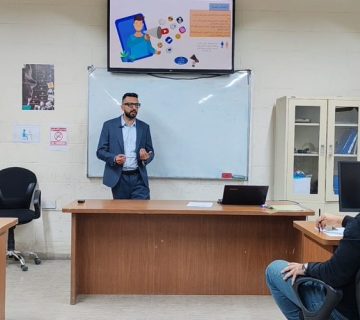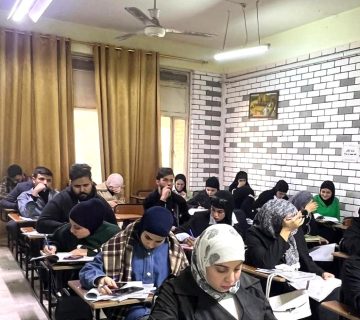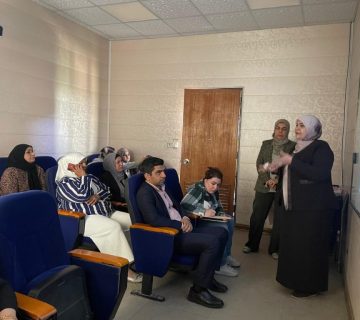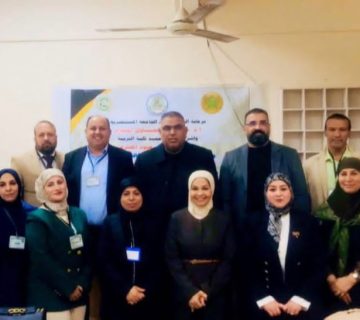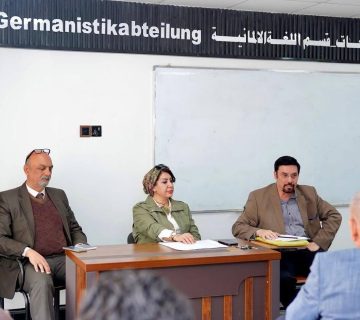


The Department of Geography at the College of Education for Women, in cooperation with the Continuing Education Unit, held a scientific workshop entitled “Heat islands and their impact on the high temperature of the city of Baghdad”, in which the Assist. Prof. Dr. Awras Ghani Abdul Hussein and the lecturer Dr. Kawthar Nasser Abbas have given lecturers.
The workshop aimed to identify the concept of heat islands and their impact on the rise in the temperature of downtown Baghdad by about 2 degrees Celsius from its suburbs, especially in the summer, and to know the natural and human causes that led to the formation of the phenomenon of heat islands. The participants reached at a set of recommendations, the most important of which is the deployment of open spaces to ensure moderate air movement within cities through the formation of wind channels, where strong air currents are generated in these streets, especially when they are parallel to the direction of their movement, and attention to planting trees and green spaces and afforestation throughout cities, as well as planting trees on islands and street sides and reducing air pollution within cities through the development of legislation for maximum concentrations of pollutants that allow their presence in the air and the use of possible alternatives in transportation.