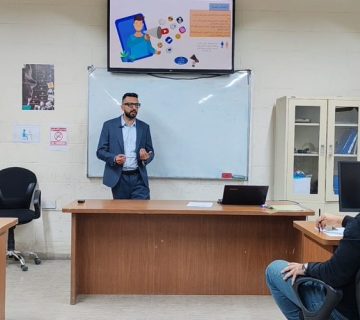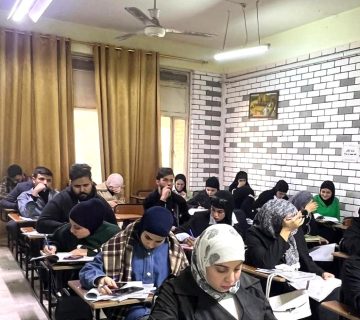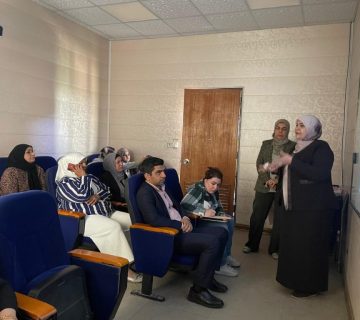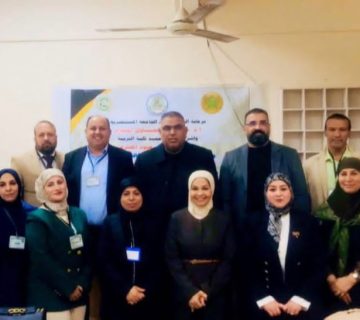
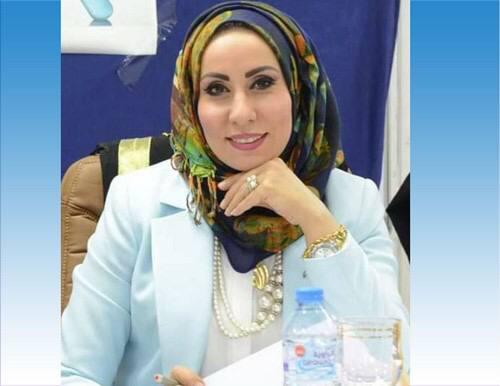
Assist. Prof. Dr. Wiaam Ahmed al-Amili, a faculty member at the Institute of Genetic Engineering and Biotechnology for Postgraduate Studies at the University of Baghdad organized recently a workshop entitled “The Basics and Principles of Human Tissue Transplantation” via the FCC platform. The workshop aimed to introduce the concept of tissue transplantation, benefits and applications, as a technique used for the separation of the cell from animal tissue, as primary cells and its transplantation independent of the organism, keeping it alive and able to perform its vital biological functions outside the organism by placing it in a growing environment full of nutrients and energy necessary for its survival under sterile and controlled environmental conditions that mimic its original environment.
Dr. Wiaam al-Amili first discussed the benefits of cell and tissue transplantation, environmental control, sample homogeneity and the possibility of re-experimenting with the same type of cells under the same conditions where lower amounts of biomaterials can be used for testing its toxicity compared to the amount we need when the experiment is done on the animal as a whole since part of these biomaterials is lost while distributing them to tissues and during the process of extraction, so that by this technique, we can produce large amounts of biomaterials. The lecturer also noted that by tissue transplantation, we can study the physiology of natural cells and their bio-chemical reactions, testing the effects of certain compounds on different types of cells such as metabolic substances, hormones, as well as the production of bio-artificial tissues to treat burns as well as the manufacture of molecules in large quantities such as certain proteins.