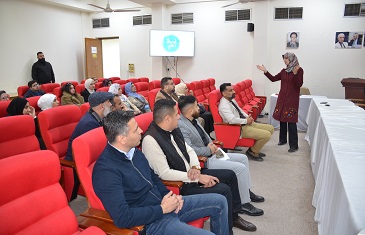
The Department of Biotechnology, in cooperation with the Continuing Education Unit at the College of Science, University of Baghdad, held a lecture entitled “The Role of Heteroforms of Fms-Like Tyrosine Kinase-1 in the Occurrence of Diseases” under the auspices of the Dean of the College, Assistant Professor Dr. Raed Faleh Hassan, and the presence of a number of graduate students, lecturers and those concerned with biological and medical specialization.
The lecture aimed to shed light on Fms-like tyrosine kinase-1, which is a receptor that binds the endothelial growth factor and placental growth factor, as this receptor plays a vital role in the formation and development of blood vessels and Fms-like tyrosine kinase-1 exists in different forms (splice variants). These forms are characterized by distinctive biological and functional characteristics, as well as their goal to identify modern developments and future trends in this field.
The lecture included a comprehensive overview of the types of heterogeneous forms of FMS-like tyrosine kinase-1 and how they form at the molecular level and their complex roles in the development of different pathological conditions, indicating that among them is the dissolved form of this receptor, noting that studies have proven that this dissolved form plays an important role in the occurrence of many diseases, including preeclampsia, cancer and rheumatoid arthritis, noting that excessive genetic expression of this dissolved form is a distinctive sign of the occurrence of these Diseases.
This lecture achieves one of the sustainable development goals represented by the third goal, which calls for ensuring healthy lives and promoting well-being for all at all ages.


