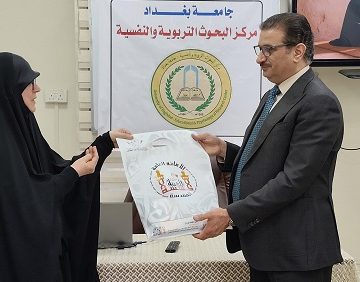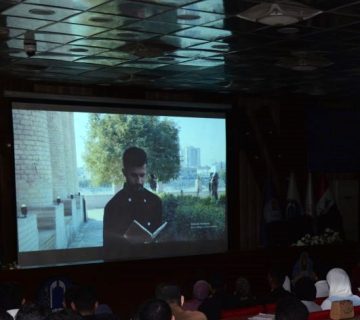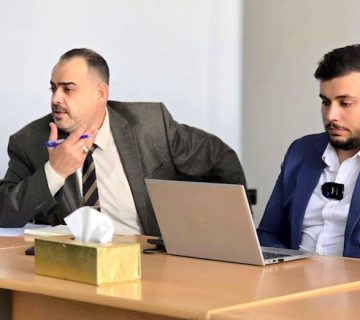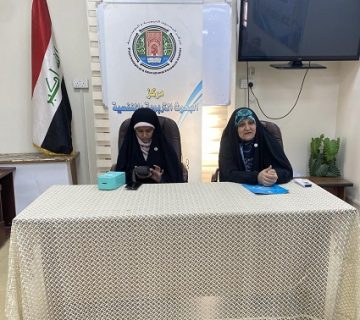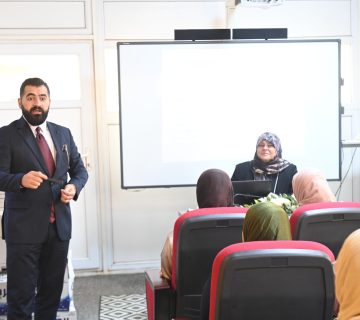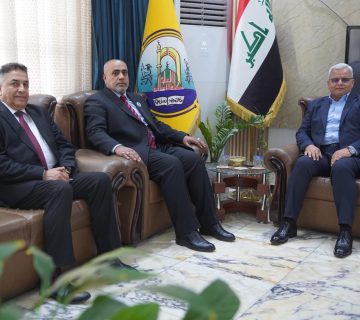

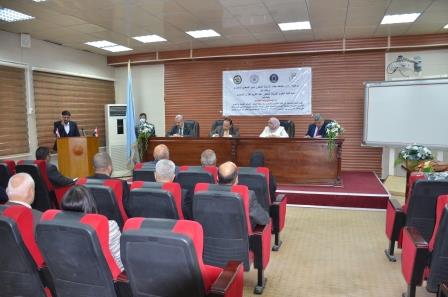
The Continuing Education Unit at the College of Science, in collaboration with the Najaf al-Ashraf Association, the Voluntary Assembly for Reform and the Network for Tolerance and Peace, has organized the first meeting of heads of civil society organizations, which was held under the slogan “The role of science in building society” under the auspices of the rector of the University of Baghdad, Prof. Dr. Munir Hamid al-Saadi, and in the presence of the dean of the College of Science, Prof. Dr. Abdul Karim al-Qazzaz.
The aim of the forum is to strengthen the role of civil society organizations, support and develop them and maintain their independence in accordance with the law and their importance in promoting the scientific process in Iraq, the importance of promoting the freedom of citizens to establish and join the Non-Governmental Organizations (NGOs), and to find a central mechanism to organize the registration of these organizations in accordance with the objectives consistent with the vision and mission of the General Secretariat of the Council of Ministers.
The dean of the college delivered then a speech in which he stated that “The use of potential of all diversity in the development of societies and the building of states according to a value system is supposed to mimic the scientific, technological, human and cognitive development of the Iraqi society as well as its advancement to be in line with the developed countries,” adding that “the civil society organizations should assist in the scientific and educational development process of the Iraqi universities in a way that they provide services to the community and to strengthen the genuine partnership with civil society institutions and NGOs by seeking a clear government program that will regulate the participatory relationship between the state and NGOs, deepen the principles of social and moral responsibility for all people, and to provide a political and legislative climate that encourages effective partnership in planning, implementation, monitoring and follow-up processes.