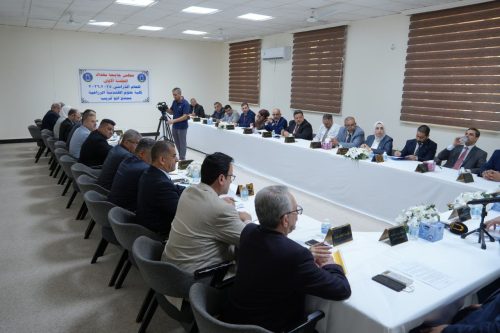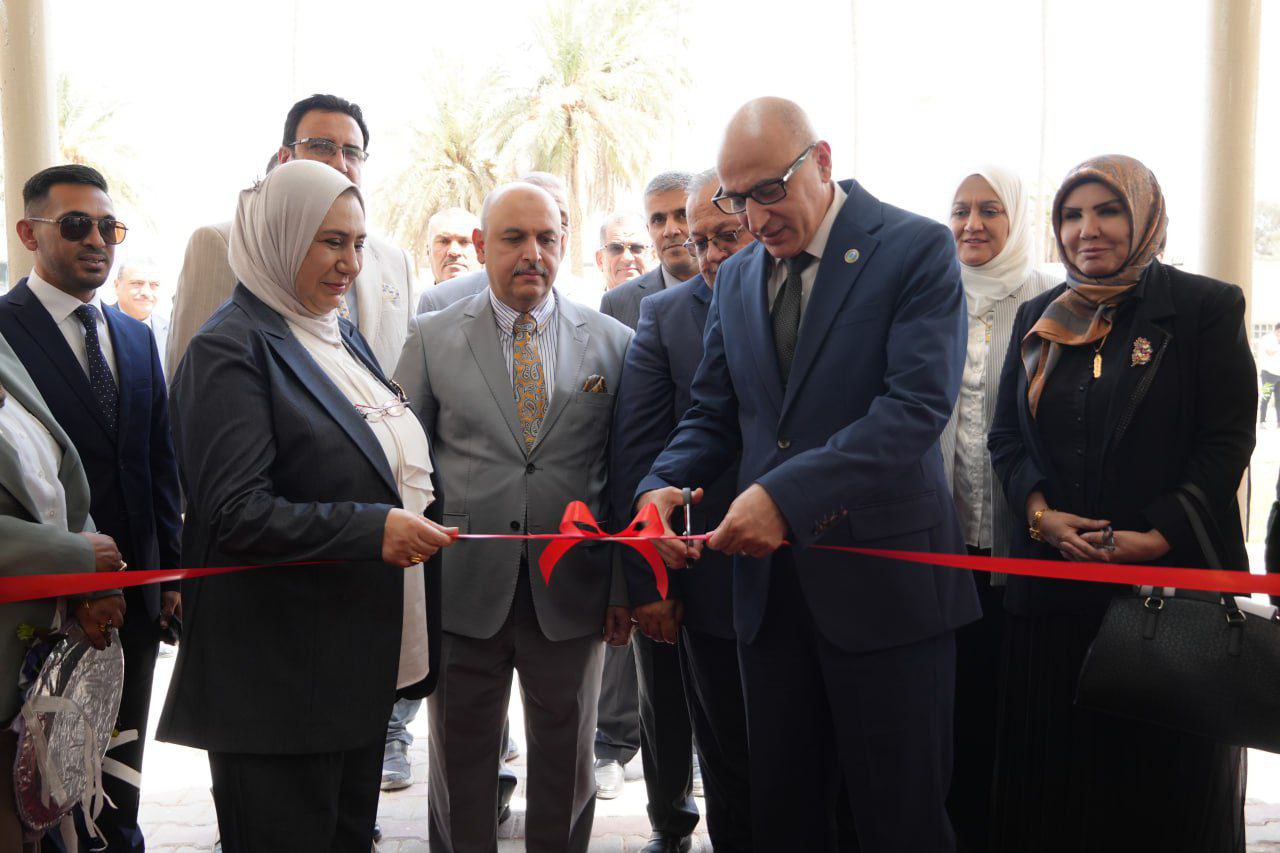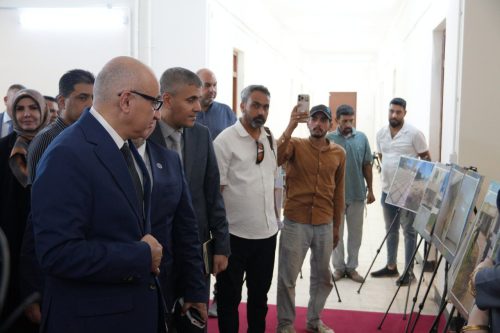
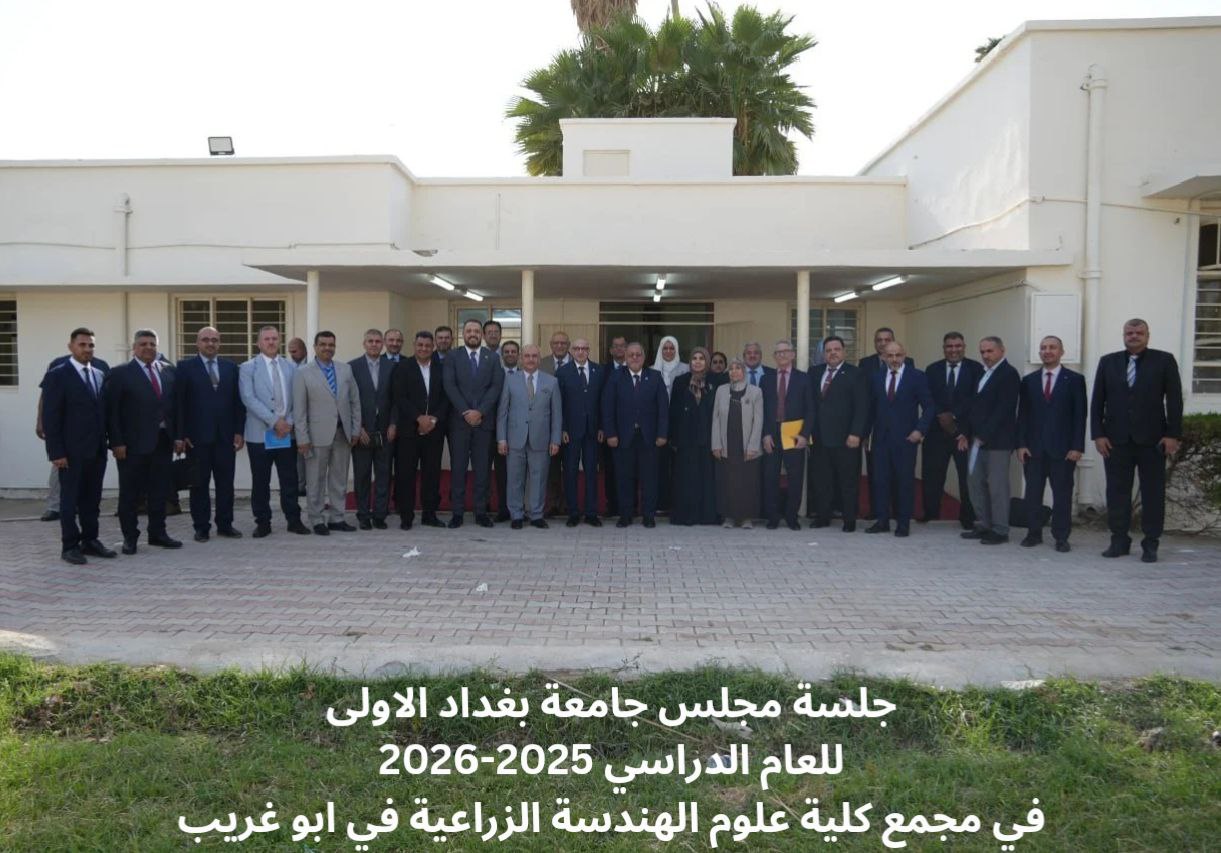
In a move that marks the revival of academic life at the Abu Ghraib campus, the University of Baghdad Council convened its first session for the academic year 2025–2026 at the College of Agricultural Engineering Sciences. This session follows nearly a decade of the college’s absence from this vital location due to exceptional circumstances.
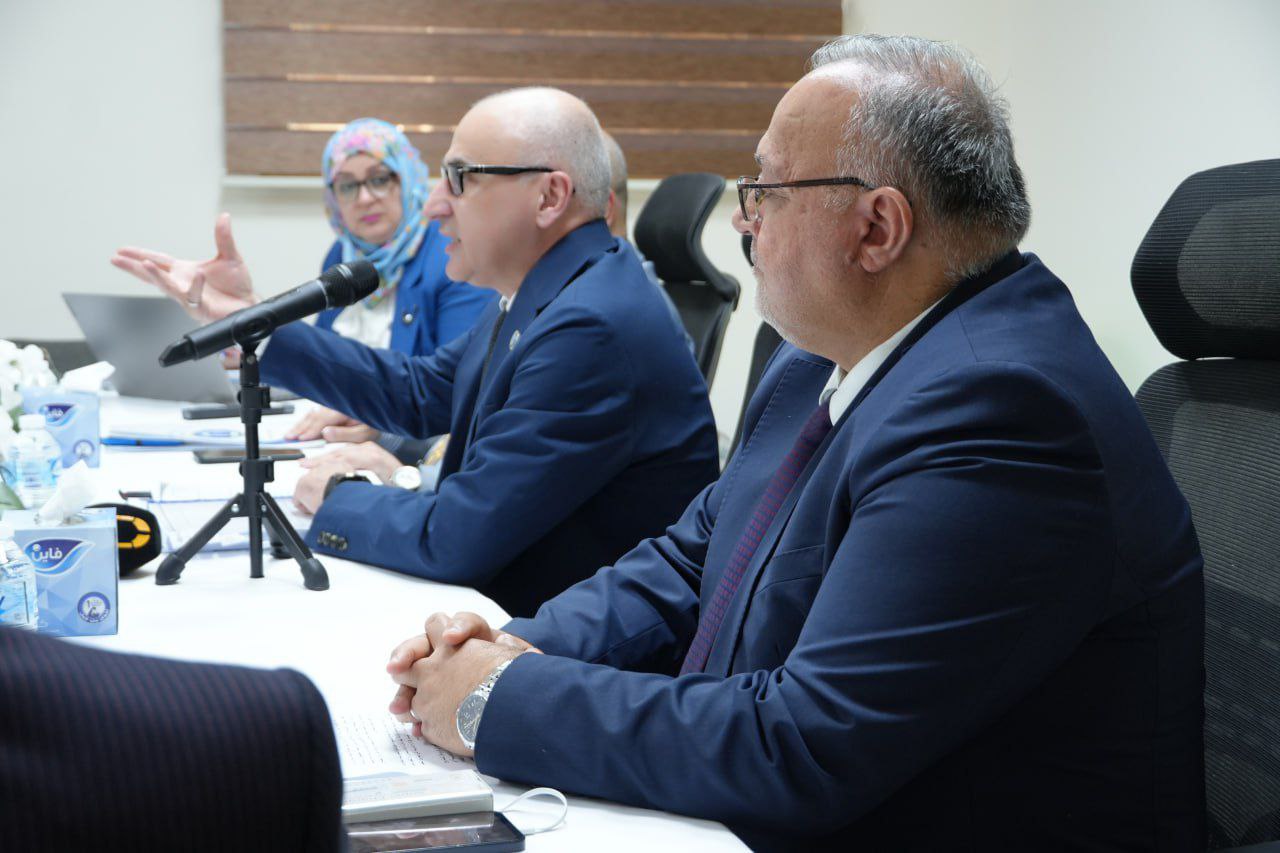
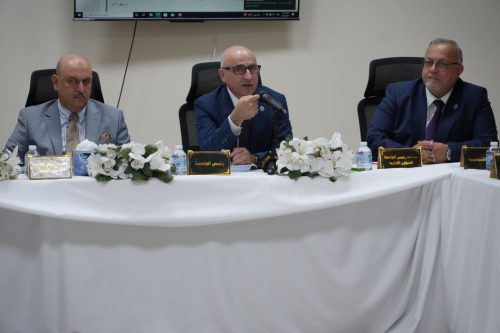
The session was chaired by Professor Dr. Bahaa Ibraheem Ansaf, President of the University of Baghdad, with the attendance of council members. This event symbolizes the official return of the College of Agricultural Engineering Sciences to its primary location in Abu Ghraib and the resumption of its pivotal role in serving the community and actively contributing to the development of the agricultural sector.
In his address, the University President emphasized that holding the council meeting in Abu Ghraib represents a new beginning for activating the college’s scientific and agricultural capabilities. He noted that this strategic location will enhance applied education and support the local economy through student projects and applied research that benefit the agricultural sector.
In the same context, the council discussed the college’s plans for a gradual return to the campus and reviewed the key needs and requirements necessary for the success of this initiative. The President affirmed his full support for the college’s efforts in implementing its plan and pledged continued backing until the full return to the site is achieved.
Council members stressed the importance of leveraging this transition to develop partnership programs with the private sector and to strengthen the college’s role in supporting food security and achieving sustainable development goals—particularly in the areas of smart agriculture, natural resource management, and the advancement of local food industries.
The session also included discussions on academic and administrative plans for the new academic year, mechanisms for enhancing the quality of education and scientific research, and support for student and community initiatives as part of the university’s strategy to serve society and the national economy.
This initiative contributes to several Sustainable Development Goals, including Goal 2: Zero Hunger and Sustainable Agriculture; Goal 4: Quality Education; Goal 11: Sustainable Cities and Communities; and Goal 17: Partnerships for the Goals.