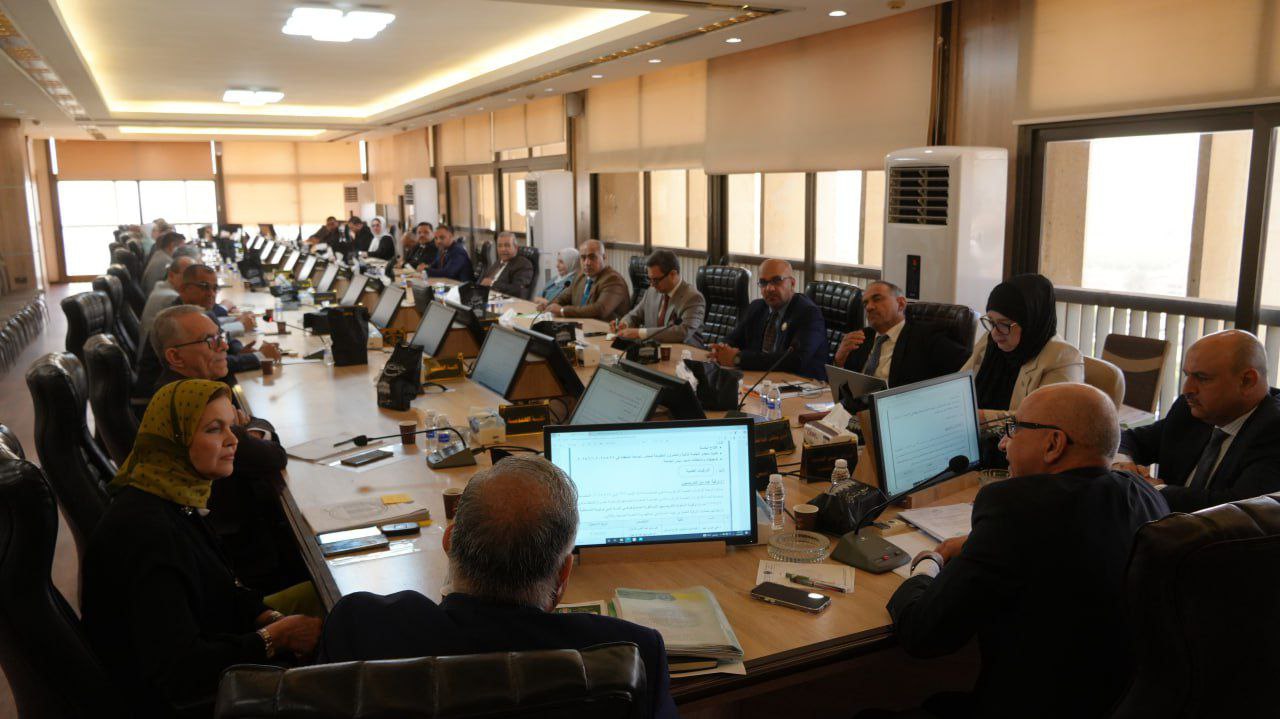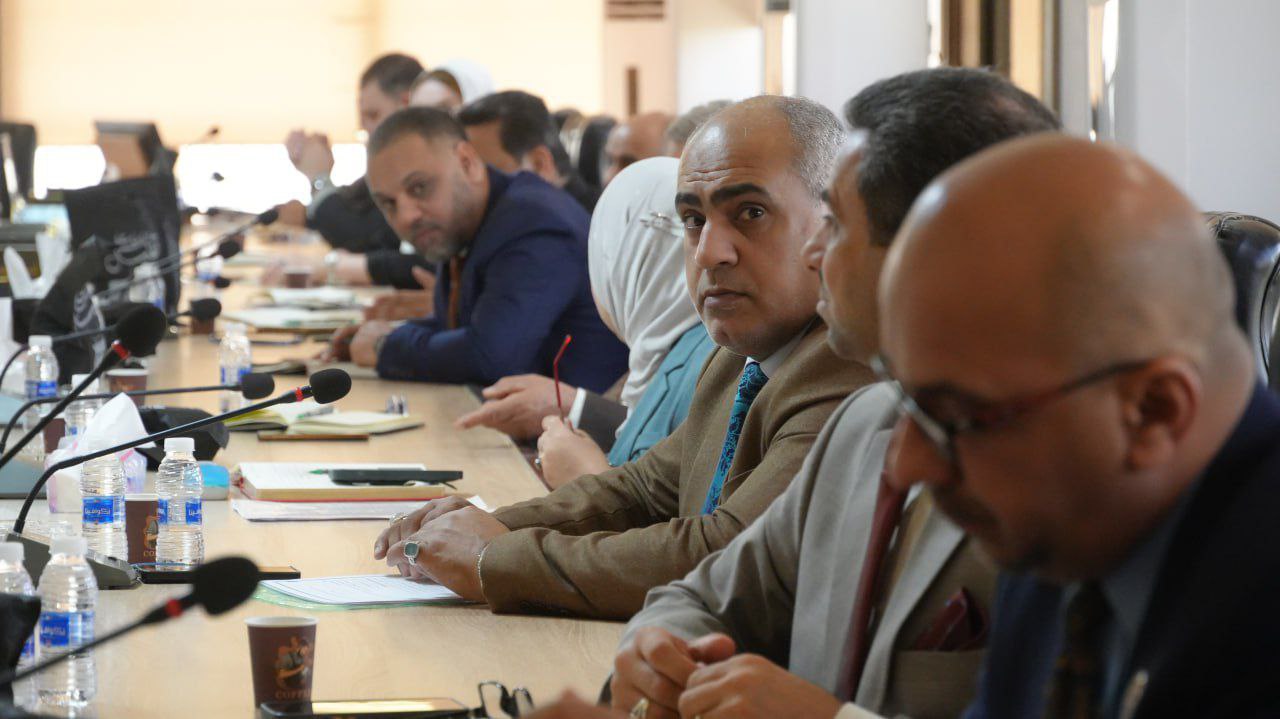

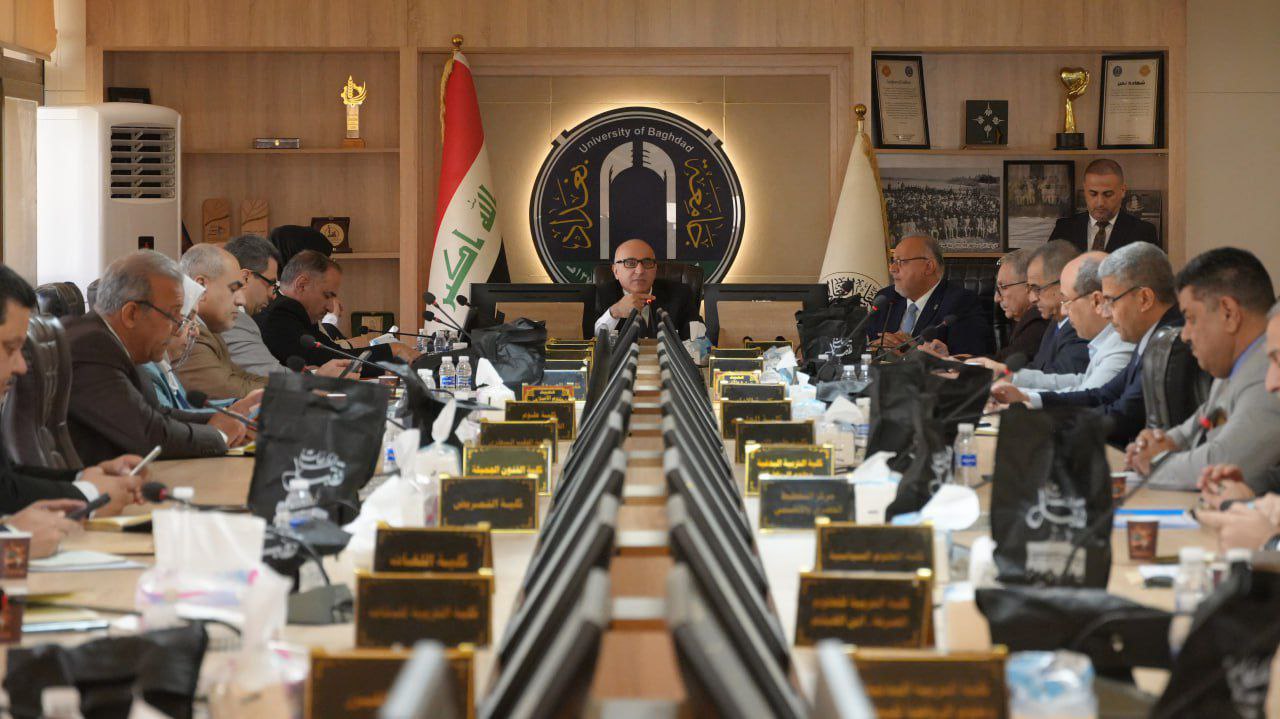
The University of Baghdad Council held its 23rd session for the academic year 2024–2025, chaired by Prof.Dr. Bahaa Ibraheem Ansaf, President of the University. The council discussed a series of directives and decisions aimed at enhancing student services and developing the university’s infrastructure and administrative systems.
At the beginning of the session, the council reviewed a letter from the Supervision and Scientific Evaluation Body at the Ministry of Higher Education and Scientific Research, which included directives regarding student dormitories. The University President directed that dormitories be prepared during the summer break for students wishing to continue their stay, particularly those accepted under the “Study in Iraq” initiative. He emphasized the importance of providing food baskets for these students, to be funded by the Higher Education Fund and coordinated by the Dormitory Affairs Department.
The University President also instructed all college deans to expedite the process of entering the required data into the Ministry’s digital transformation platforms, including the Human Resource Management System and the Student Information Management System, due to their impact on improving administrative and academic efficiency.
In a related matter, the council stressed the importance of obtaining security clearance when processing any application related to retirement or appointment to administrative positions. The council also underscored the importance of media outreach in highlighting the university’s achievements and qualitative developments, calling for the dissemination of university news through TV channels and social media platforms.
The session concluded with a discussion of the agenda items and the adoption of necessary recommendations to support the educational process and improve academic and administrative performance at the university.
The University Presidency also affirmed its support for all its units in carrying out volunteer and community service activities aimed at poverty reduction, such as distributing food baskets and providing appropriate housing. These initiatives contribute to the achievement of several Sustainable Development Goals (SDGs):
Goal 1: No Poverty, Goal 4: Quality Education, Goal 8: Decent Work and Economic Growth, Goal 11: Sustainable Cities and Communities and
Goal 17: Partnerships for the Goals.