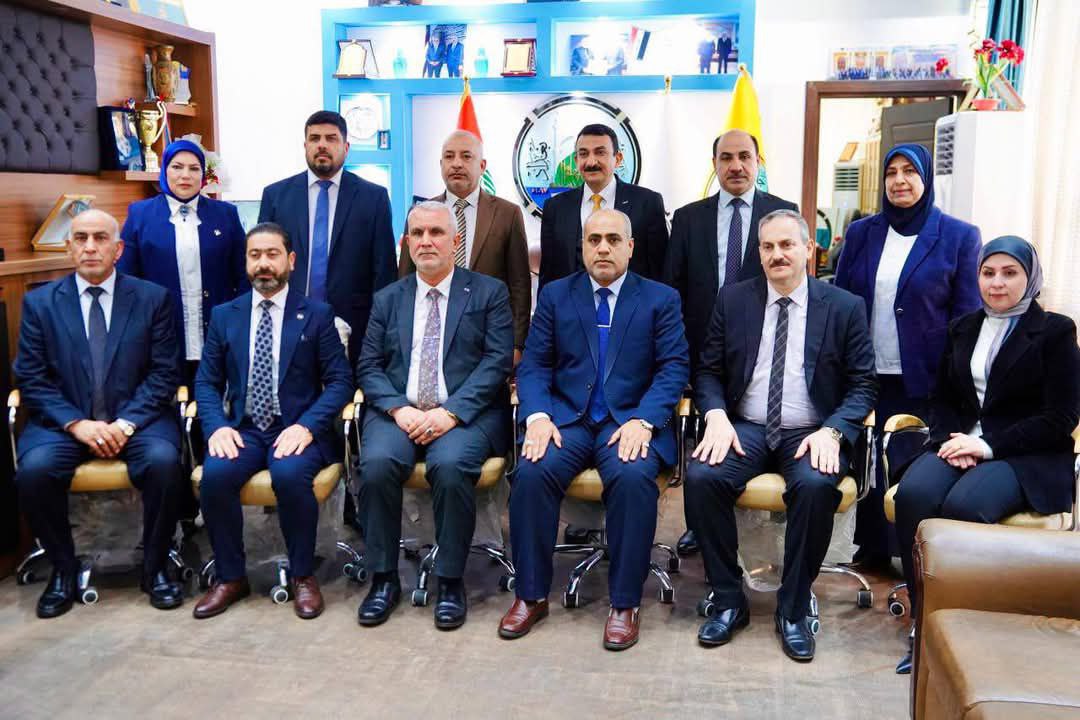
The College of Islamic Sciences at the University of Baghdad has achieved a significant academic milestone through its active participation in the international conference on “Artificial Intelligence Systems, Blockchain, and Communication Technologies.” Faculty members of the college contributed 16 scientific papers, all of which were published in the prestigious Scopus database via the German publishing house Springer. This accomplishment reflects the college’s high scientific standards and its growing interest in utilizing modern technology in various fields of knowledge.
The research presented by the college’s researchers covered a range of contemporary and important topics, including: the impact of artificial intelligence tools on advancing scientific research, the use of artificial intelligence technologies in teaching Arabic and English, the role of artificial intelligence in disaster management and religious services, the jurisprudential perspectives on the use of artificial intelligence in medical fields, historical text analysis using artificial intelligence, and the promotion of societal values through technology.
The conference was supported and sponsored by several renowned global universities and institutions, such as the University of Michigan (USA), the University of Nottingham (UK), King Salman University, and Springer Publishing. This support added a distinguished academic dimension to the event, enhancing the international scientific presence of the participants.
This scientific achievement represents an added asset to the record of the College of Islamic Sciences at the University of Baghdad, reaffirming its central role in keeping pace with scientific developments and harnessing technology to serve the humanities and social sciences. It also contributes to solidifying the university’s position on the global academic map and opens new horizons for exchanging knowledge and experiences among researchers worldwide.
This achievement aligns with the realization of Sustainable Development Goal 4, which calls for quality education by developing and enhancing faculty members’ research skills and publishing research, as well as Goal 17, which emphasizes partnerships for achieving the goals through academic activities supporting the university’s strategy in implementing the Sustainable Development Goals.


