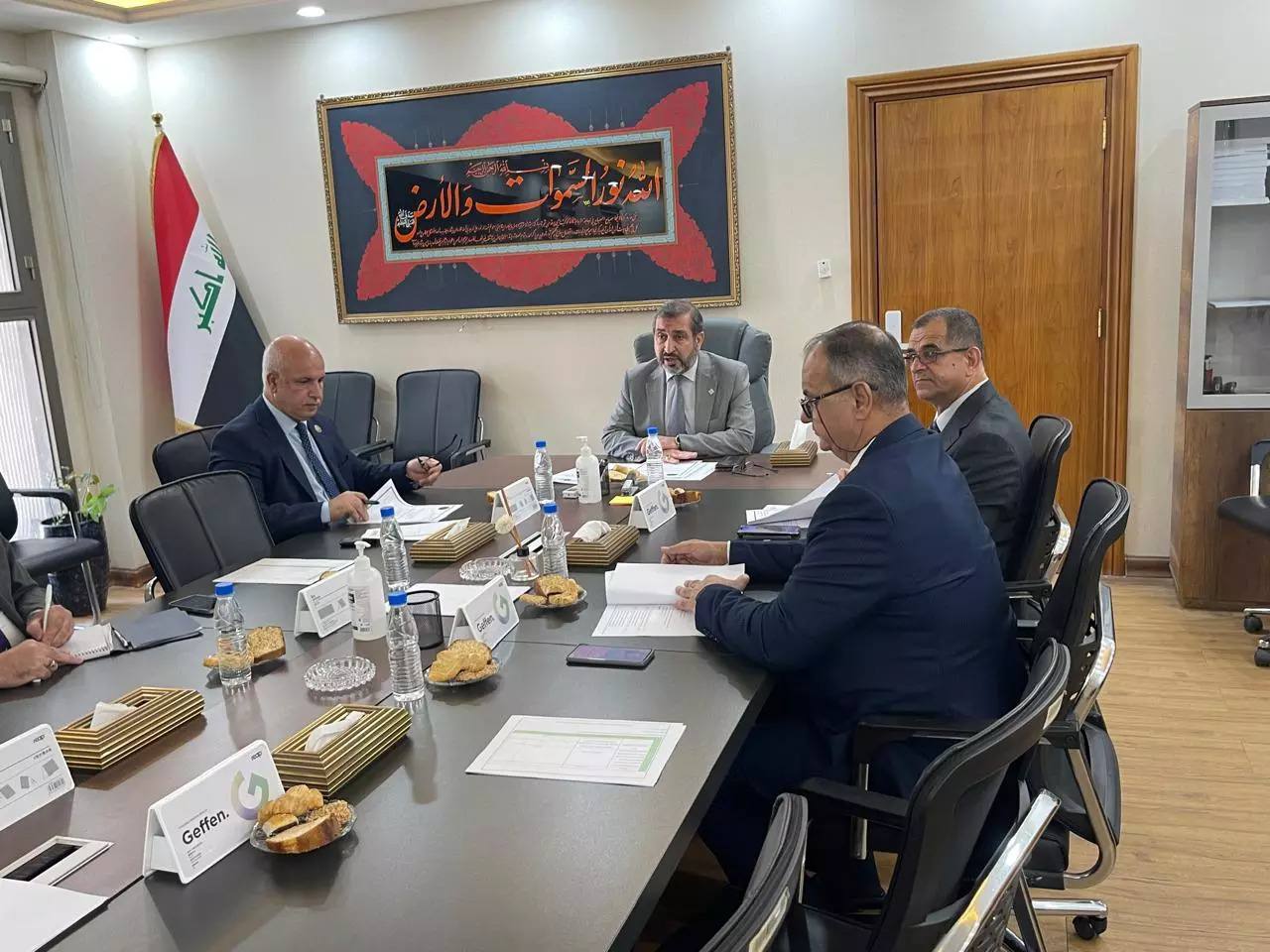
Professor Dr. Sabah Manfi Redha, Dean of the College of Administration and Economics, took part in the meetings of the subcommittee formed under the main committee of the National Initiative for Developing the Capacities of State Employees. The meetings were held at the General Secretariat of the Council of Ministers, reflecting his commitment to enhancing the quality of higher education and aligning its outcomes with national development needs.
The subcommittee comprised a distinguished group of academic and administrative leaders, chaired by the Director General of the Department of Government Coordination and Citizen Affairs. Members included the deans of the Colleges of Administration and Economics from the Universities of Baghdad, Al-Mustansiriya, and Basra, as well as the Director of the Graduate Studies Department at the Ministry of Higher Education and Scientific Research, who served as the committee’s rapporteur.
The committee is tasked with proposing exemptions for applicants to postgraduate programs in strategic planning, local administration, and quality management from the self-funded channel, or offering appropriate tuition reductions, or having the benefiting institutions cover the costs. It also aims to introduce additional academic programs under the initiative to encourage state employees to pursue advanced studies and ensure the sustainability of these programs.
Strategic proposals were discussed to incentivize public sector employees to enroll in postgraduate studies in key administrative fields. These included financial facilitation measures such as tuition waivers, fee reductions, or institutional sponsorships. The committee also explored mechanisms to integrate graduates into planning, policy, and quality departments across ministries and government institutions, thereby enhancing institutional performance and contributing to the achievement of Sustainable Development Goals—particularly Goal 4 (Quality Education), Goal 16 (Peace, Justice, and Strong Institutions), and Goal 17 (Partnerships for the Goals).
New high diploma programs were added in specialized areas such as demographic statistics, GIS, economic feasibility, financial auditing, intellectual and professional safety, data science, and artificial intelligence applications.
These efforts are part of the government’s broader strategy to improve the competencies of public sector employees and elevate administrative performance through specialized academic programs tailored to institutional needs. They also reaffirm the college’s role in supporting national policies aimed at building qualified human capital and fostering integration between higher education and administrative development, thereby promoting a culture of institutional excellence in line with Iraq’s developmental transformations.