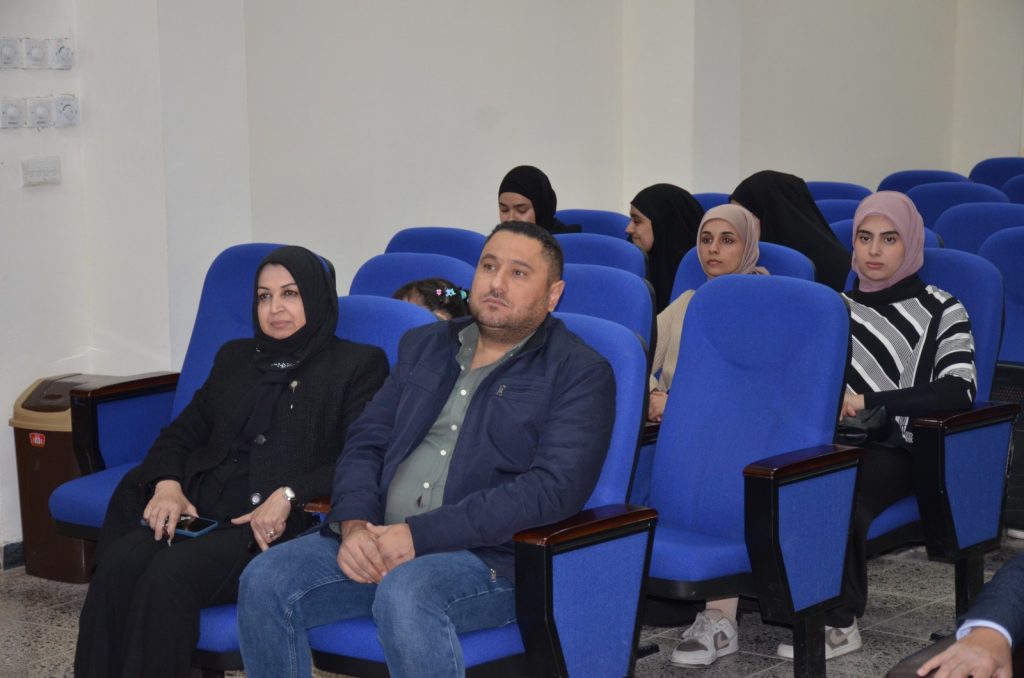
The Department of Astronomy and Space, in cooperation with the Continuing Education Unit at the College of Science, University of Baghdad, organized a panel discussion entitled “Understanding Star Clusters and Galaxy Building Blocks” under the auspices of the Dean of the College, Assistant Professor Dr. Raed Faleh Hassan, and the presence of a number of graduate students, teachers and those concerned with astronomy and space.
The lecture aimed to understand star clusters, which are essential components in galaxies and provide important insights to understand the process of formation and evolution of stars, as well as the importance of the chemical history of the universe, as these clusters are divided into two main types: open clusters and spherical clusters, each type of which has unique characteristics.
The lecture included a review of the astronomical laboratories of these star systems of great importance, as their homogeneous star clusters help test star evolution models and calibrate cosmic distance scales, indicating that they allow analyzing their dynamics in exploring the distribution of dark matter and understanding the gravitational structure of the galaxy, which contributes to tracking the mechanisms of their formation and survival in revealing how galaxies form, as these clusters often reflect the complexities of the history of fusion and formation of galactic structures, reviewing the latest developments in spectroscopy and high-resolution imaging technologies. Using observatories such as Hubble and Gaia, which are revolutionaries in the study of star clusters, enabling scientists to evaluate their ages, mineral compositions, and accurate orbital characteristics, these clusters remain essential elements for understanding the structure and evolution of the universe.
This panel discussion achieves one of the sustainable development goals represented by the seventeenth goal, which calls for partnership in order to achieve the goals.


