

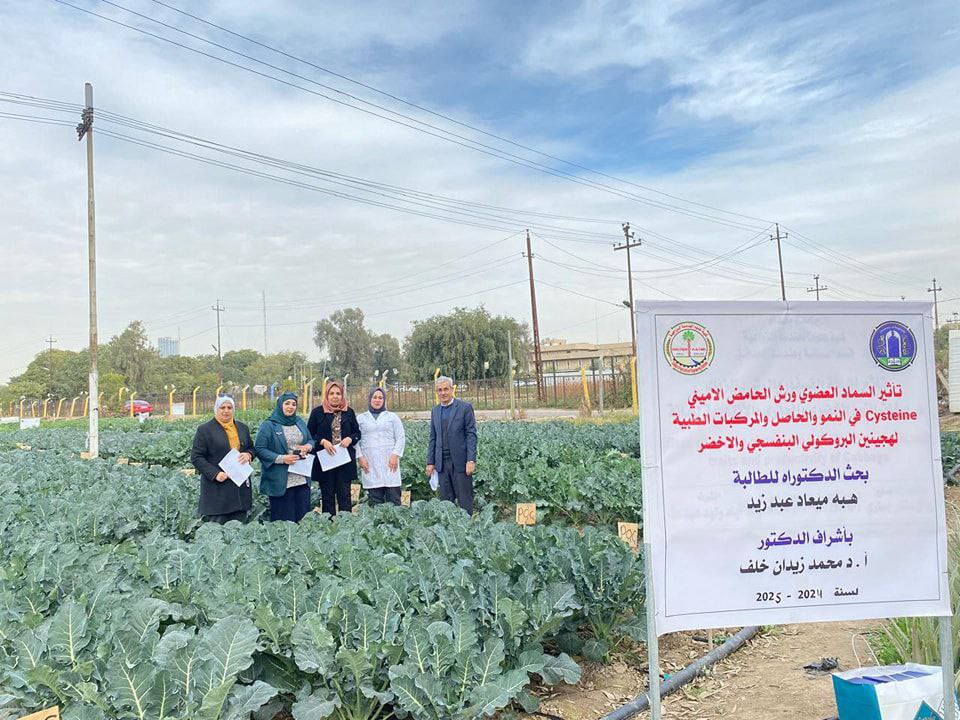
As part of efforts to enhance sustainable development and achieve food security, the College of Agricultural Engineering Sciences at the University of Baghdad has conducted a scientific study on the impact of organic fertilization and amino acid Cysteine foliar application on the growth and productivity of green and purple broccoli.
The study aims to improve crop quality using eco-friendly methods, reducing reliance on chemical fertilizers and promoting a cleaner environment. It focuses on the nutritional and medicinal value of broccoli, highlighting its bioactive compounds such as Sulforaphane and Indole-3-Carbinol, known for their cancer-fighting properties. Additionally, the study emphasizes the presence of anthocyanin pigments in purple broccoli, which act as powerful antioxidants that protect and regenerate cells.
This research marks the first experimental study in Iraq on purple broccoli cultivation, opening new avenues for sustainable agriculture and reinforcing efforts to provide healthy and balanced food that supports human health while preserving environmental balance.
Furthermore, this study aligns with the United Nations Sustainable Development Goals (SDGs), specifically Goal 2 (Zero Hunger) and Goal 15 (Life on Land), by promoting food security and fostering responsible agricultural practices.


