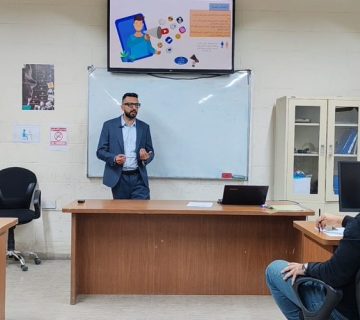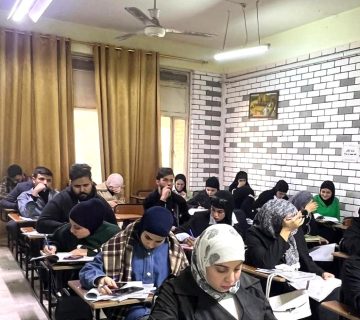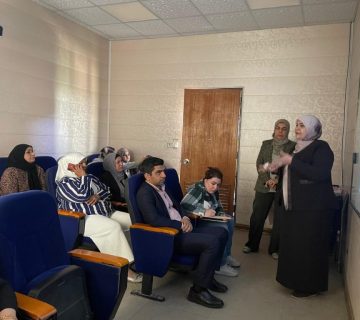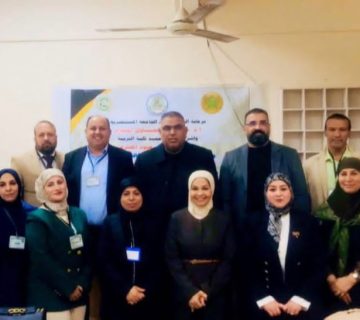

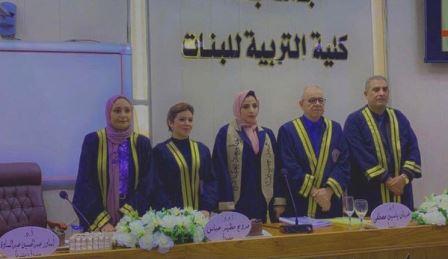
The College of Education for Women has recently witnessed a discussion panel presented by the master’s student Bodour Hussein Ali from the Department of Sociology based upon her thesis entitled (Social Organization and Community Resilience in Conflict-Affected Areas: a Field Social Study in Saladin Governorate: Al-Dhuluiya District as a Model).
The study aimed to identify the nature of social life in the conflict-affected areas and to identify the role of informal organizations (whether tribe, clerics or active forces and figures) in face of extremist ideas through moderate religious sermons and their impact as a force to enhance community resilience during conflicts and to identify the role of official organizations in the resilience of society during the crisis and to identify the challenges and social initiatives within the community during the conflict process.
The study reached a number of results, the most important of which is that the most important motive in steadfastness is the purely national motive and that government institutions have an effective role within the crisis community, even if these institutions operate outside the official administrative scope, since there is a solidarity between official and informal institutions and this relationship prevails a kind of intimacy, love and cohesion and it turns out that the joining of the youth of the region to terrorist organizations motivated by hatred or violence towards community.