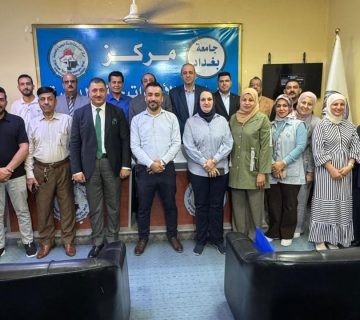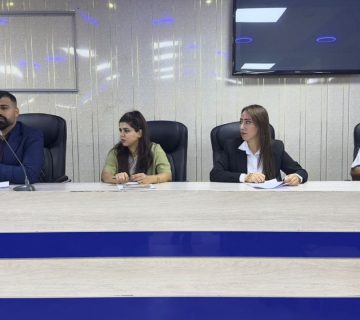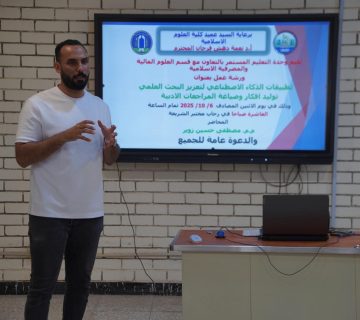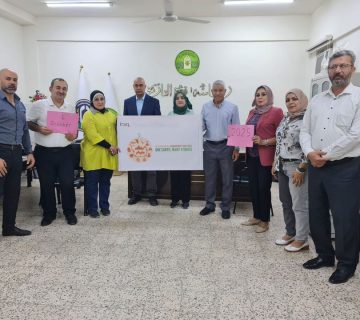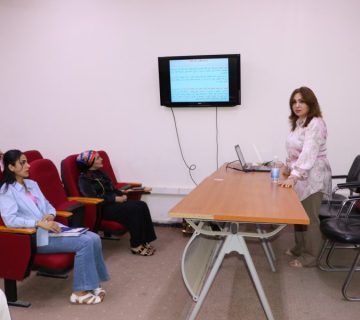
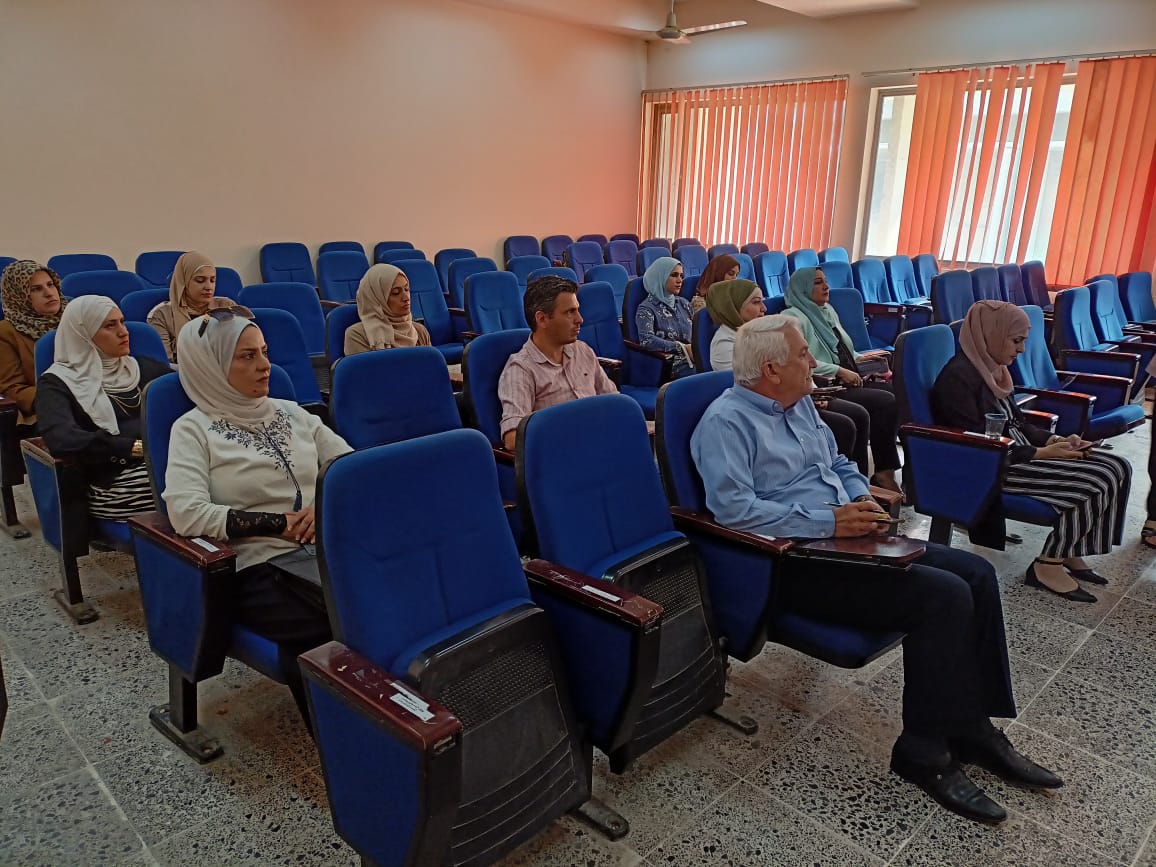
The Department of Biotechnologies, in cooperation with the Continuous Learning Unit at the College of Science at the University of Baghdad, held a lecture entitled “Viral Hemorrhagic Fever and Its Risks” in the presence of a number of students, lecturers and those concerned with medical affairs.
The lecture was delivered by Assist. Prof. Dr. Aida Hussein Ibrahim and the Assist. Prof. Dr. Ali Jabbar Rishak with the aim to highlight infectious viral diseases that can cause a severe life-threatening bug, most notably damage to the walls of small blood vessels, which makes them leak, and can hinder the ability of blood to clot, as the internal bleeding that results from this condition is usually not life-threatening, but the diseases themselves can expose life. They also introduced its common symptoms and novelties emerged from a variety of animal and human diseases caused by several types of viruses, and some of these viruses cause mild disease, while many other viruses lead to life-threatening diseases without known treatment, indicating that one of the most famous hemorrhagic viruses is Ebola, according to Johns Hopkins University in US, pointing out that it is a viral disease that may lead to death where the infection rate reached up to 40 percent, according to the World Health Organization, confirming its transmission to humans through poultry and livestock, as well as transmission between humans through direct contact with the blood of the infected person or his secretions or body fluids.