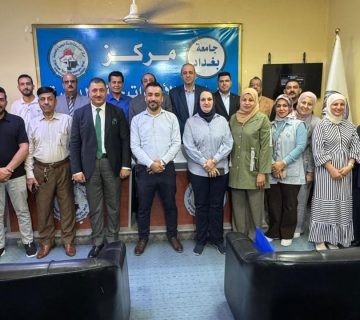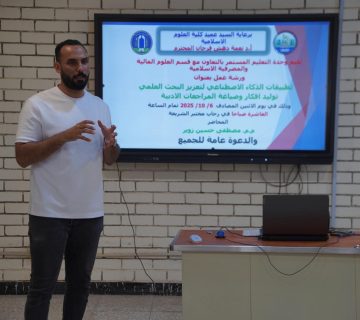


The Branch of Diseases and Poultry Diseases, in cooperation with the Continuing Education Unit at the College of Veterinary Medicine, held a workshop entitled (Optimization and quantification of immune fluorescence signals in virology research). The workshop dealt with the principles of immunofluorescence technology (IF) that is a common laboratory technique, which is based on the use of specific antibodies which have been chemically conjugated to fluorescent dyes.
In this technique, immune bodies are used to smear proteins to study the relationship of the antibody to the antigen in tissues and the use of fluorescence to visualize the location of the associated antibodies. The lecturers stated that there are two types of immunosuppression, the first is known as direct immunosuppression, which uses a single antibody, and indirect immunosuppression, where primary and secondary antibodies are associated with Fluorine are used, and this technique is mainly used to detect microorganisms such as fungi, viruses and bacteria, as well as to detect the internal parts of the cell.