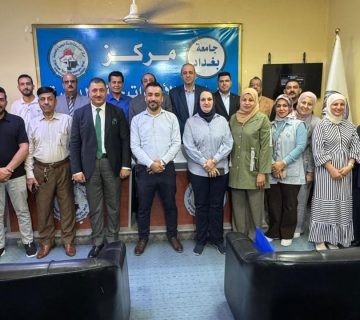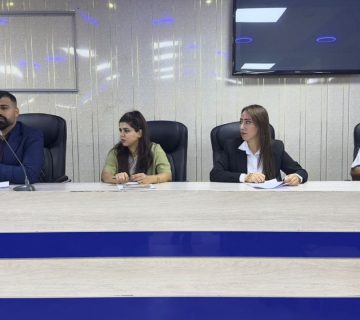

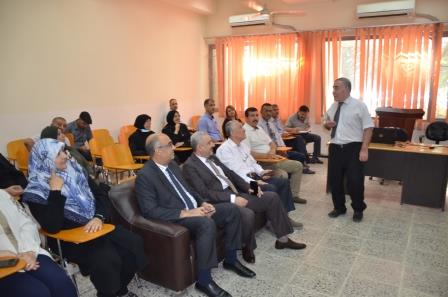
The Remote Sensing Unit, in cooperation with the Continuing Education Unit at the College of Science, has organized a lecture entitled “Water Crisis in Iraq: Challenges and Solutions” in the presence of the dean of the college, Prof. Dr. Abdul Karim Al-Qazzaz and his assistant for scientific affairs as well as a number of students, faculty members and those concerned with water resources. The lecture aimed to shed light on the water crisis in Iraq due to drought resulting from the low rate of rainfall and extreme heat resulting from global warming, and the decline of Iraq’s water resources by more than 50% since the past three years, as a result of the construction of huge dams and the change of river streams from their natural paths, which has become Iraq ranked among the five countries of the world most vulnerable to climate change and desertification despite the presence of the months of the Tigris and Euphrates in this country.
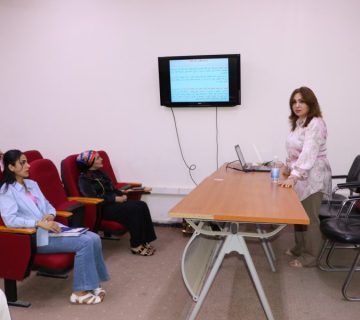
The lecture, that was delivered by the Prof. Dr. Saleh Mahdi Ali, addressed various matters, including climate change since Iraq is located within the dry and semi-arid region and suffers from the lack of rainfall, dryness of rivers, high temperatures, as well as an increase in the population, which all contributed to the increase in the demand for water, in addition to the policies adopted by the neighboring countries. The lecturer then proposed some solutions, most notably clean-up main and subsidiary rivers in order to reduce the rates of river loss, the need to the practice of diplomatic pressure and the use of the laws of the interdependent countries to reach new agreements with upstream countries so as to secure the future share of the water flowing to Iraq, adopting industrial rainfall methods and remove all excesses on water quotas.