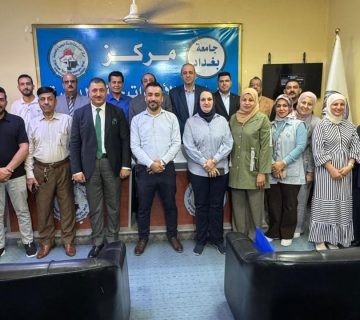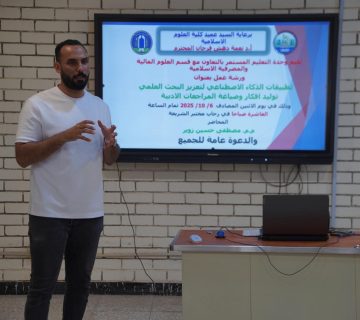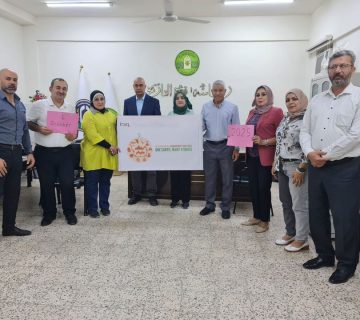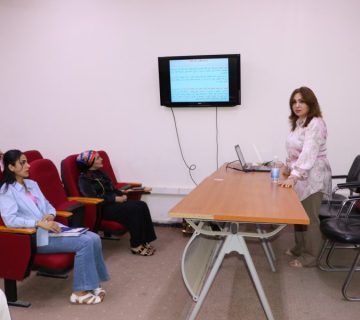

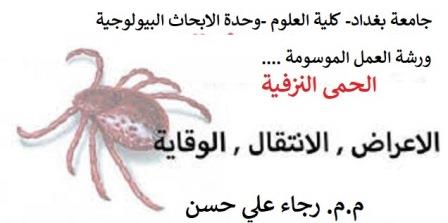
The Biological Research Unit, in cooperation with the Continuing Education Unit at the College of Science has organized lately a virtual workshop on the “Hemorrhagic Fever” with the participation of a number of researchers and medical specialists in epidemiology.
The workshop aimed at shedding light on the origin of this fever which is an infectious viral disease that affects a wide range of wild and domestic animals (Crimean-Congo haemorrhagic fever (CCHF)), including livestock, sheep, goats and human beings, in addition to addressing the possibility of many birds to resist infection, and the impact of ostriches in the rapid spread of infection in areas of endemic virus, which is the original cause behind human cases witnessed at the present. The workshop was administrated by the Assist. lecturer Raja Ali Hassan who introduced how animals are infected by the bite of infected ticks, showing that the virus remains in the bloodstream of animals for about a week after being infected, allowing the cycle of transmission from ticks to animals.