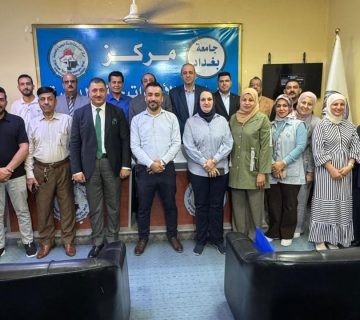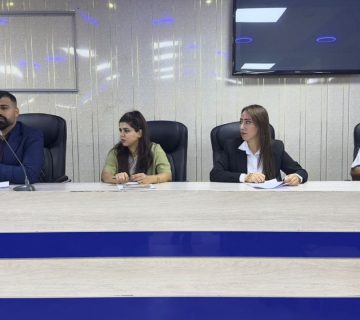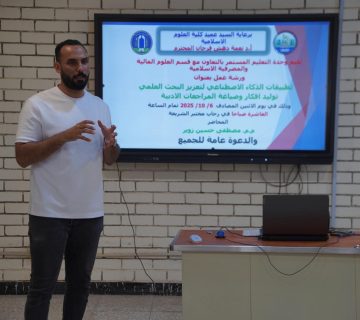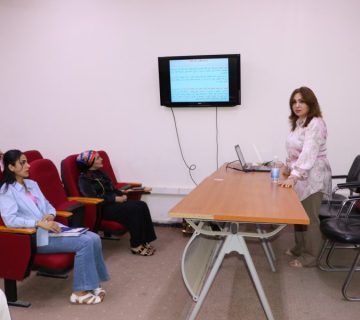

The Department of Physics, in collaboration with the Continuing Education Unit at the College of Science has organized a scientific symposium entitled “Designing the system of producing household electricity mediated by solar cells” in the presence of a number of students and those concerned with energy production. The symposium aimed to introduce flexible solar cells with a lower cost and higher efficiency by developing solar energy production cells, rather than traditional silicon solid cells that gain many advantages, compared to traditional “costly inorganic” cells, consisting of thick, oversized and solid panels requiring fixed stabilization points, as measured by those that can be manufactured in the form of thin, bendable rolls, and integrated, to be part of the surrounding environment and that meet all tastes.
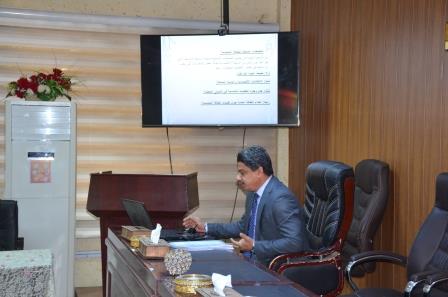
The lectures were presented by Prof. Dr. Falah Abdul Hassan with an identification of the problem of electricity production in Iraq, finding household energy at a lower cost and working on clean energy that relies on new cells that are sufficient and can produce electricity at a lower cost and can reduce the total cost of the solar system, making it a clean energy source everywhere and can revolutionize global power generation, reduce pollution rates, and reduce the impact of climate change. He also stressed that the flexibility of organic solar cells is useful in small applications, industries that traditional solar cells cannot adapt to, pointing out that traditional cells remain more suitable if solar cell farms are built in the desert.