

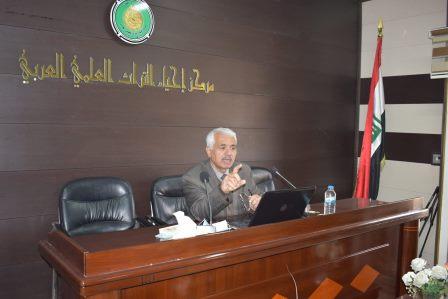
The Center for the Revival of Arab Scientific Heritage at the University of Baghdad has organized a seminar entitled “The Role of Baghdad Healing Houses in the Nineteenth Century”, that was delivered by the head of the Department of Pure Sciences, Prof. Dr. Saadi Ibrahim al-Darraji. The lecturer addressed many factors that caused the spread of epidemics in Iraq, including that related to its climate, soil, natural disasters, poor health and hygiene, as well as the low economic level of people in society, social and cultural backwardness, all of which contributed to the spread of deadly epidemics and the frequency of attacks on Iraq.
He also added that the deadly epidemic waves of serious diseases such as plague, cholera and smallpox caused the death of hundreds of thousands of Iraqis during the Ottoman era, as the country witnessed in the second half of the nineteenth century, and the beginning of the 20th century (19) epidemics of plague, including five outbreaks that were widespread as Iraq witnessed a cholera outbreak in this era and reached up to 16 times in widespread cases. He also referred to the establishment of a public hospital in Baghdad that was planned and designed in 1872 and after discussing this project in the State Council, it was decided that be built in the garden belonging to Suleiman Pasha Endowments located on the banks of the Tigris River in Karkh, but the main obstacle to this project was the lack of a special budget to build such a hospital, therefore many public figures donated money to construct it in 1872 and it was called “The Strangers Hospital”.