
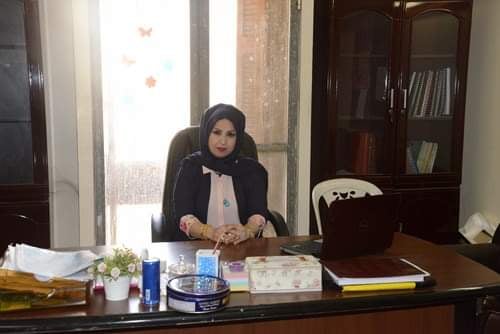
The Institute of Genetic Engineering and Bio-Technologies for Postgraduate Studies at the University of Baghdad has organized an electronic workshop entitled “Human-animal diseases: strategies and challenges” via Google Meet platform delivered by the Assist. Prof. Dr. Bushra Jassim Mohammed with the participation of a large number of specialists, researchers and those interested in this topic. The workshop included the definition of animal-sourced diseases as diseases and infections transmitted naturally between humans and vertebrate animals, three categories of endemic animal diseases that exist in many places and affect many people, animals and epidemics and are scattered in temporal and spatial distribution, which have recently appeared in a population or existed earlier but are rapidly increasing in occurrence or in geographical scope.
The workshop also touched on statistics indicating that about 1 billion cases of illness and millions of deaths occur each year due to animal-origin diseases. About 60% of emerging infectious diseases reported globally are animal-sourced diseases. More than 30 new human pathogens have been discovered in the past three decades, 75% of which originated in animals. Emerging animal-source diseases pose an increasing threat to public health in the Eastern Mediterranean region of the World Health Organization. In the past two decades, animal-origin diseases originating from 18 out of 22 countries in the region have often been reported with outbreaks of explosive diseases and high deaths unprecedented in any other WHO region. The occurrence of this infection is unpredictable since it originates from animals, and this infection is often caused by new viruses and is detected only when an outbreak occurs. The participants recommended the prevention and control of animal diseases originating through sanitation, personal hygiene, animal-friendly health care, the use of a safe water source, every effort to provide safe drinking water for both families and animals, and the proper construction of wells to protect against pollution from livestock, human and wildlife waste, taking into account chlorine treatment or connection to a rural water system as a way to secure a safe water supply.