
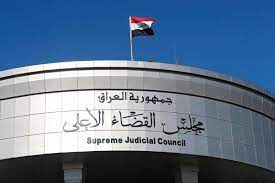
The Department of Public Policy at the Center for Strategic and International Studies has organized a workshop entitled “The failure to form the Federal Supreme Court of Iraq and its impact on the political process”, delivered by the Assist. lecturer Hussein Ali Sabri.
He lecturer pointed out that after the events of 2003 there was a significant development in the Iraqi legal system by activating the principle of separation of powers, where the Federal Supreme Court of Iraq was created under the article (44) of the Law on the Administration of the Iraqi State for the Transition in 2004, which is one of the most important pillars of the Iraqi judiciary if it takes into account the exclusive judicial and constitutional jurisdictions it exercises, as well as the work of the court was often changed and employed politically, with the ambiguity of some terms and the significant lack of organization of some provisions, all of which raised several problems with political implications resulting from the imbalance in the incompleteness of the federal court due to the loss of two members of its members and reflected on the Iraqi political decision-making process. Then the lecturer also explained the disruption of the Federal Court means that there is a defect in the constitutional structure of the Iraqi state, and the parliament and its political blocs must give priority and the great importance of the law of the Federal Supreme Court, and to be aware of the future of keeping the Federal Court disabled or illegal for any reason because this will lead in the simplest case not to ratify the results of any parliamentary elections in the future.