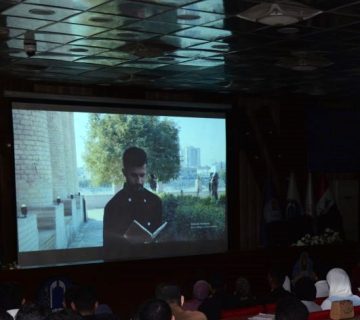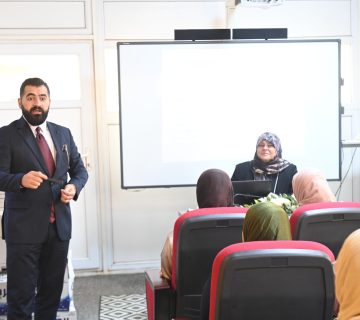

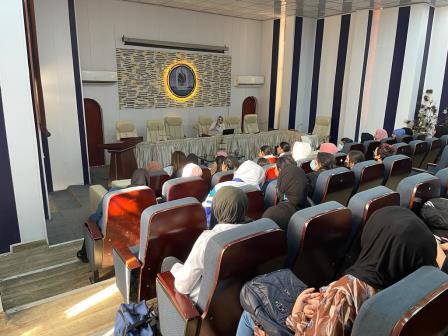
The college of physical education and sports sciences for women at the University of Baghdad has organized an awareness lecture entitled “Smoking and its harms” directed towards the students of the undergraduate study, delivered by the head of the psychological guidance and educational guidance unit, Assist. Prof. Dr. Abeer Dakhil Hatim, and the unit’s rapporteur, Assist. Prof. Dr. Zainab Qahtan Abdul Amir. The lecturers addressed in this event all matters related to the components of nicotine in tobacco, which is considered one of the strongest toxins found in the cigarette, as well as tar as a black glue substance used mainly in the manufacture of paints, also other toxic gases represented by carbon monoxide.
The most important damage caused by smoking is its effects on human health, including increased heart rate, constriction of its arteries, increased adhesion of platelets causing clots, the incidence of psychosis that is a disease which destroys the structure of the lung, causing the possibility of cancer, as well as its effect on thinking and concentration as it reduces the level of human activity, leading to constant headaches, dizziness and atrophy of nerves, feeling nervous, anxiety, strays, illusions and obsessions. The lecturers added that the most important reasons behind this habit is the need for imitating parents and bad friends, poor control of the family, various psychological pressures, as well as being indifferent to its consequences. The lecture concluded with some important steps that can be adopted by smokers to quit smoking, mainly getting a great deal of relaxation, especially during the first days of stopping smoking, eating more fruits and fresh vegetables, avoiding eating fatty foods, drinking much water to get rid of nicotine and other harmful substances, besides reducing drinking tea and coffee, staying away from smokers, eating more lemon and orange daily at breakfast because it reduces the desire to smoke and consulting the nearest anti-smoking clinics to get involved in a smoking cessation program.
.